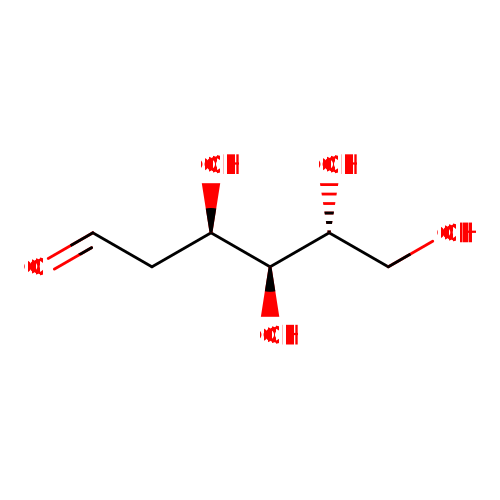
Showing metabocard for 2-Deoxyglucose (MMDBc0029704)
| Record Information | |||||||||||||
|---|---|---|---|---|---|---|---|---|---|---|---|---|---|
| Version | 1.0 | ||||||||||||
| Status | Detected and Quantified | ||||||||||||
| Creation Date | 2021-11-17 23:38:16 UTC | ||||||||||||
| Update Date | 2022-08-31 17:12:51 UTC | ||||||||||||
| Metabolite ID | MMDBc0029704 | ||||||||||||
| Metabolite Identification | |||||||||||||
| Common Name | 2-Deoxyglucose | ||||||||||||
| Description | 2-Deoxyglucose is a glucose molecule that has the 2-hydroxyl group replaced by hydrogen, so that it cannot undergo further glycolysis. It can be used as a glycolysis inhibitor. 2-deoxyglucose is taken up by E. coli and is phosphorylated to 2-deoxyglucose-6P. Glucosamine, mannose and 2-deoxyglucose enter Escherichia coli by the component of the phosphotransferase system coded for by the gene ptsM. 2-Deoxyglucose is an unnatural glucose analog and is not considered a natural E. coli substrate or metabolite. 2-Deoxyglucose is a relatively rare yet natural monosaccharide that can be made from D-glucose, D-aminoglucose and a variety of amino-polysaccharides. | ||||||||||||
| Structure | 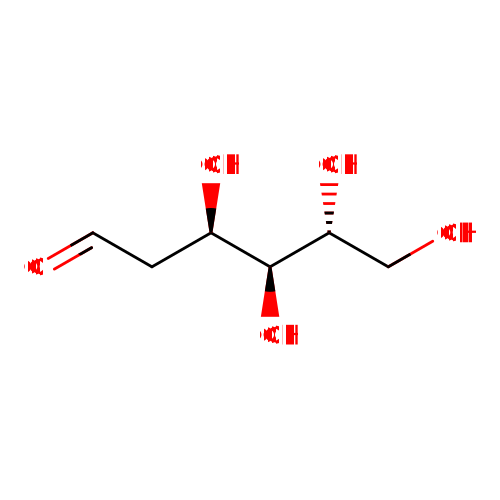 | ||||||||||||
| Synonyms | Not Available | ||||||||||||
| Molecular Formula | C6H12O5 | ||||||||||||
| Average Mass | 164.157 | ||||||||||||
| Monoisotopic Mass | 164.068473486 | ||||||||||||
| IUPAC Name | Not Available | ||||||||||||
| Traditional Name | Not Available | ||||||||||||
| CAS Registry Number | 154-17-6 | ||||||||||||
| SMILES | Not Available | ||||||||||||
| InChI Identifier | InChI=1S/C6H12O5/c7-2-1-4(9)6(11)5(10)3-8/h2,4-6,8-11H,1,3H2/t4-,5-,6+/m1/s1 | ||||||||||||
| InChI Key | VRYALKFFQXWPIH-PBXRRBTRSA-N | ||||||||||||
| Chemical Taxonomy | |||||||||||||
| Functional Ontology | |||||||||||||
| Not Available | |||||||||||||
| Physical Properties | |||||||||||||
| State | Solid | ||||||||||||
| Predicted Properties | Not Available | ||||||||||||
| Spectra | |||||||||||||
| Chromatographic Retention Times and Retention Indices | |||||||||||||
| Retention Times | Not Available | ||||||||||||
| Retention Indices | Not Available | ||||||||||||
| Chromatographic Retention Times and Retention Indices | |||||||||||||
| Retention Times | Not Available | ||||||||||||
| Retention Indices | Not Available | ||||||||||||
| Biological Properties | |||||||||||||
| Cellular Locations | Not Available | ||||||||||||
| Biospecimen Locations | Not Available | ||||||||||||
| Tissue Locations | Not Available | ||||||||||||
| Associated OMIM IDs | |||||||||||||
| Human Proteins and Enzymes | |||||||||||||
| |||||||||||||
| Human Pathways | |||||||||||||
| Pathways |
| ||||||||||||
| Microbial Pathways | |||||||||||||
| Pathways | Not Available | ||||||||||||
| Metabolic Reactions | |||||||||||||
Reactions This table shows at most 20 reactions. For the full list of associated reactions: See All Associated Reactions
| |||||||||||||
| Health Effects and Bioactivity | |||||||||||||
| |||||||||||||
| Microbial Sources | |||||||||||||
| |||||||||||||
| Exposure Sources | |||||||||||||
| Other Exposures |
| ||||||||||||
| Host Biospecimen and Location | |||||||||||||
| |||||||||||||
| External Links | |||||||||||||
| HMDB ID | Not Available | ||||||||||||
| DrugBank ID | Not Available | ||||||||||||
| Phenol Explorer Compound ID | Not Available | ||||||||||||
| FooDB ID | Not Available | ||||||||||||
| KNApSAcK ID | Not Available | ||||||||||||
| Chemspider ID | Not Available | ||||||||||||
| KEGG Compound ID | Not Available | ||||||||||||
| BioCyc ID | Not Available | ||||||||||||
| BiGG ID | Not Available | ||||||||||||
| Wikipedia Link | Not Available | ||||||||||||
| METLIN ID | Not Available | ||||||||||||
| PubChem Compound | Not Available | ||||||||||||
| PDB ID | Not Available | ||||||||||||
| ChEBI ID | Not Available | ||||||||||||
| Food Biomarker Ontology | Not Available | ||||||||||||
| CMMC Knowledgebase | Not Available | ||||||||||||
| General References | |||||||||||||
| |||||||||||||