
Showing metabocard for decanoyl-CoA (MMDBc0033018)
Plant
| Record Information | |||||||||||||||||||||
|---|---|---|---|---|---|---|---|---|---|---|---|---|---|---|---|---|---|---|---|---|---|
| Version | 1.0 | ||||||||||||||||||||
| Status | Detected and Quantified | ||||||||||||||||||||
| Creation Date | 2021-11-19 04:31:19 UTC | ||||||||||||||||||||
| Update Date | 2022-12-15 22:51:53 UTC | ||||||||||||||||||||
| Metabolite ID | MMDBc0033018 | ||||||||||||||||||||
| Metabolite Identification | |||||||||||||||||||||
| Common Name | decanoyl-CoA | ||||||||||||||||||||
| Description | Decanoyl CoA is a human liver acyl-CoA ester. It is selected to determine apparent kinetic constants for human liver acyl-CoA due to its relevance to the human diseases with cellular accumulation of this esters, especially to metabolic defects in the acyl-CoA dehydrogenation steps of the branched-chain amino acids, lysine, 5-hydroxy lysine, tryptophan, and fatty acid oxidation pathways. It is concluded that the substrate concentration is decisive for the glycine conjugate formation and that the occurrence in urine of acylglycines reflects an intramitochondrial accumulation of the corresponding acyl-CoA ester. (PMID: 3707752 ). | ||||||||||||||||||||
| Structure | 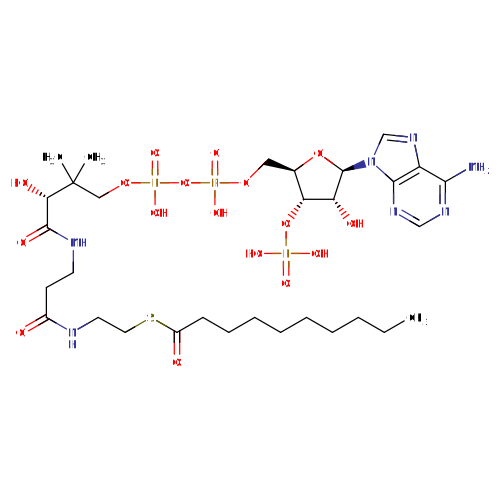 | ||||||||||||||||||||
| Synonyms | Not Available | ||||||||||||||||||||
| Molecular Formula | C31H54N7O17P3S | ||||||||||||||||||||
| Average Mass | 921.783 | ||||||||||||||||||||
| Monoisotopic Mass | 921.250973563 | ||||||||||||||||||||
| IUPAC Name | Not Available | ||||||||||||||||||||
| Traditional Name | Not Available | ||||||||||||||||||||
| CAS Registry Number | 1264-57-9 | ||||||||||||||||||||
| SMILES | Not Available | ||||||||||||||||||||
| InChI Identifier | InChI=1S/C31H54N7O17P3S/c1-4-5-6-7-8-9-10-11-22(40)59-15-14-33-21(39)12-13-34-29(43)26(42)31(2,3)17-52-58(49,50)55-57(47,48)51-16-20-25(54-56(44,45)46)24(41)30(53-20)38-19-37-23-27(32)35-18-36-28(23)38/h18-20,24-26,30,41-42H,4-17H2,1-3H3,(H,33,39)(H,34,43)(H,47,48)(H,49,50)(H2,32,35,36)(H2,44,45,46)/t20-,24-,25-,26+,30-/m1/s1 | ||||||||||||||||||||
| InChI Key | CNKJPHSEFDPYDB-HSJNEKGZSA-N | ||||||||||||||||||||
| Chemical Taxonomy | |||||||||||||||||||||
| Functional Ontology | |||||||||||||||||||||
| Not Available | |||||||||||||||||||||
| Physical Properties | |||||||||||||||||||||
| State | Solid | ||||||||||||||||||||
| Predicted Properties | Not Available | ||||||||||||||||||||
| Spectra | |||||||||||||||||||||
| Chromatographic Retention Times and Retention Indices | |||||||||||||||||||||
| Retention Times | Not Available | ||||||||||||||||||||
| Retention Indices | Not Available | ||||||||||||||||||||
| Chromatographic Retention Times and Retention Indices | |||||||||||||||||||||
| Retention Times | Not Available | ||||||||||||||||||||
| Retention Indices | Not Available | ||||||||||||||||||||
| Biological Properties | |||||||||||||||||||||
| Cellular Locations |
| ||||||||||||||||||||
| Biospecimen Locations | Not Available | ||||||||||||||||||||
| Tissue Locations | Not Available | ||||||||||||||||||||
| Associated OMIM IDs | |||||||||||||||||||||
| Human Proteins and Enzymes | |||||||||||||||||||||
| |||||||||||||||||||||
| Human Pathways | |||||||||||||||||||||
| Pathways |
| ||||||||||||||||||||
| Microbial Pathways | |||||||||||||||||||||
| Pathways | Not Available | ||||||||||||||||||||
| Metabolic Reactions | |||||||||||||||||||||
Reactions This table shows at most 20 reactions. For the full list of associated reactions: See All Associated Reactions
| |||||||||||||||||||||
| Health Effects and Bioactivity | |||||||||||||||||||||
| |||||||||||||||||||||
| Microbial Sources | |||||||||||||||||||||
| |||||||||||||||||||||
| Exposure Sources | |||||||||||||||||||||
| Food Exposures | |||||||||||||||||||||
| Other Exposures |
| ||||||||||||||||||||
| Host Biospecimen and Location | |||||||||||||||||||||
| |||||||||||||||||||||
| External Links | |||||||||||||||||||||
| External Links | Not Available | ||||||||||||||||||||
| General References | |||||||||||||||||||||
| |||||||||||||||||||||