
Showing metabocard for Methyl nonanoate (MMDBc0033681)
| Record Information | |||||||||||||
|---|---|---|---|---|---|---|---|---|---|---|---|---|---|
| Version | 1.0 | ||||||||||||
| Status | Detected and Quantified | ||||||||||||
| Creation Date | 2021-11-19 04:58:44 UTC | ||||||||||||
| Update Date | 2022-08-31 22:37:42 UTC | ||||||||||||
| Metabolite ID | MMDBc0033681 | ||||||||||||
| Metabolite Identification | |||||||||||||
| Common Name | Methyl nonanoate | ||||||||||||
| Description | Methyl nonanoate, also known as methyl pelargonate or 1-nonanecarboxylate, belongs to the class of organic compounds known as fatty acid methyl esters. Fatty acid methyl esters are compounds containing a fatty acid that is esterified with a methyl group. They have the general structure RC(=O)OR', where R=fatty aliphatic tail or organyl group and R'=methyl group. Methyl nonanoate can be obtained from the formal condensation of methanol and nonanoic acid. It is a colourless, oily liquid with a fruity, tropical or pear-like odour, used in perfumes and flavours. It has a waxy, wine-like, green celery flavour. Methyl nonanoate is a very hydrophobic molecule, with a high boiling point of 213 oC. It is practically insoluble in water with a measured water solubility of just 22.5 mgl/L. Outside the human body, methyl nonanoate is found in a number of foods including apples, bananas, blackberries, butter, blue cheese, grapes, hop oil, pineapples, baked potatoes, star fruit, strawberries, tobacco, vanilla and white wine. Methyl nonanoate exhibits nematicidal activity against root-knot and soybean cyst nematodes and was found to be toxic to nematodes at concentrations as low as 0.2 uL a.i./litre (PMID: 19274268 ). | ||||||||||||
| Structure | 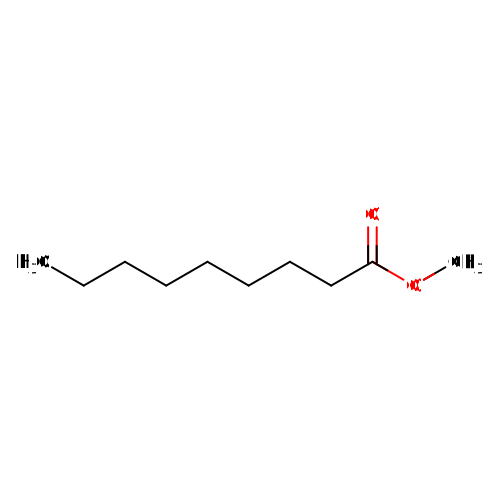 | ||||||||||||
| Synonyms | Not Available | ||||||||||||
| Molecular Formula | C10H20O2 | ||||||||||||
| Average Mass | 172.2646 | ||||||||||||
| Monoisotopic Mass | 172.146329884 | ||||||||||||
| IUPAC Name | Not Available | ||||||||||||
| Traditional Name | Not Available | ||||||||||||
| CAS Registry Number | 1731-84-6 | ||||||||||||
| SMILES | Not Available | ||||||||||||
| InChI Identifier | InChI=1S/C10H20O2/c1-3-4-5-6-7-8-9-10(11)12-2/h3-9H2,1-2H3 | ||||||||||||
| InChI Key | IJXHLVMUNBOGRR-UHFFFAOYSA-N | ||||||||||||
| Chemical Taxonomy | |||||||||||||
| Functional Ontology | |||||||||||||
| Not Available | |||||||||||||
| Physical Properties | |||||||||||||
| State | Solid | ||||||||||||
| Predicted Properties | Not Available | ||||||||||||
| Spectra | |||||||||||||
| Chromatographic Retention Times and Retention Indices | |||||||||||||
| Retention Times | Not Available | ||||||||||||
| Retention Indices | Not Available | ||||||||||||
| Chromatographic Retention Times and Retention Indices | |||||||||||||
| Retention Times | Not Available | ||||||||||||
| Retention Indices | Not Available | ||||||||||||
| Biological Properties | |||||||||||||
| Cellular Locations |
| ||||||||||||
| Biospecimen Locations | Not Available | ||||||||||||
| Tissue Locations | Not Available | ||||||||||||
| Associated OMIM IDs | |||||||||||||
| Human Proteins and Enzymes | |||||||||||||
| |||||||||||||
| Human Pathways | |||||||||||||
| Pathways |
| ||||||||||||
| Microbial Pathways | |||||||||||||
| Pathways | Not Available | ||||||||||||
| Metabolic Reactions | |||||||||||||
Reactions This table shows at most 20 reactions. For the full list of associated reactions: See All Associated Reactions
| |||||||||||||
| Health Effects and Bioactivity | |||||||||||||
| |||||||||||||
| Microbial Sources | |||||||||||||
| |||||||||||||
| Exposure Sources | |||||||||||||
| Food Exposures | |||||||||||||
| Other Exposures |
| ||||||||||||
| Host Biospecimen and Location | |||||||||||||
| |||||||||||||
| External Links | |||||||||||||
| External Links | Not Available | ||||||||||||
| General References | |||||||||||||
| |||||||||||||