
Showing metabocard for PG(24:0/28:0) (MMDBc0046992)
| Record Information | |||||||||||||
|---|---|---|---|---|---|---|---|---|---|---|---|---|---|
| Version | 1.0 | ||||||||||||
| Status | Detected and Quantified | ||||||||||||
| Creation Date | 2021-11-19 15:03:34 UTC | ||||||||||||
| Update Date | 2022-09-01 01:40:19 UTC | ||||||||||||
| Metabolite ID | MMDBc0046992 | ||||||||||||
| Metabolite Identification | |||||||||||||
| Common Name | PG(24:0/28:0) | ||||||||||||
| Description | PG(24:0/28:0) is a phosphatidylglycerol. Phosphatidylglycerols consist of a glycerol 3-phosphate backbone esterified to either saturated or unsaturated fatty acids on carbons 1 and 2. As is the case with diacylglycerols, phosphatidylglycerols can have many different combinations of fatty acids of varying lengths and saturation attached to the C-1 and C-2 positions. PG(24:0/28:0), in particular, consists of one tetracosanoyl chain to the C-1 atom, and one octacosanoyl to the C-2 atom. In E. coli glycerophospholipid metabolism, phosphatidylglycerol is formed from phosphatidic acid (1,2-diacyl-sn-glycerol 3-phosphate) by a sequence of enzymatic reactions that proceeds via two intermediates, cytidine diphosphate diacylglycerol (CDP-diacylglycerol) and phosphatidylglycerophosphate (PGP, a phosphorylated phosphatidylglycerol). Phosphatidylglycerols, along with CDP-diacylglycerol, also serve as precursor molecules for the synthesis of cardiolipin, a phospholipid found in membranes. | ||||||||||||
| Structure | 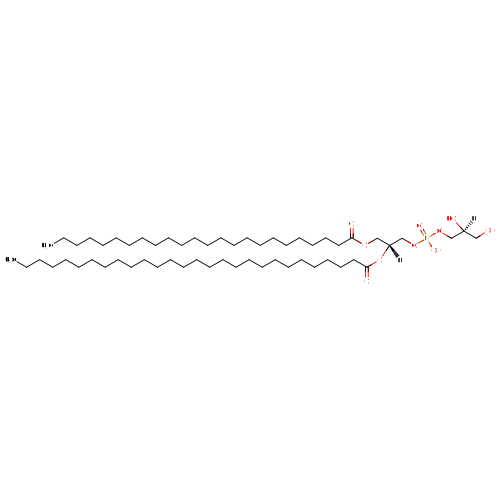 | ||||||||||||
| Synonyms | Not Available | ||||||||||||
| Molecular Formula | C58H115O10P | ||||||||||||
| Average Mass | 1003.522 | ||||||||||||
| Monoisotopic Mass | 1002.822786901 | ||||||||||||
| IUPAC Name | Not Available | ||||||||||||
| Traditional Name | Not Available | ||||||||||||
| CAS Registry Number | Not Available | ||||||||||||
| SMILES | Not Available | ||||||||||||
| InChI Identifier | InChI=1S/C58H115O10P/c1-3-5-7-9-11-13-15-17-19-21-23-25-26-27-28-30-32-34-36-38-40-42-44-46-48-50-58(62)68-56(54-67-69(63,64)66-52-55(60)51-59)53-65-57(61)49-47-45-43-41-39-37-35-33-31-29-24-22-20-18-16-14-12-10-8-6-4-2/h55-56,59-60H,3-54H2,1-2H3,(H,63,64)/t55-,56+/m0/s1 | ||||||||||||
| InChI Key | VSDXMPRFUWZIEV-KKQLDWOFSA-N | ||||||||||||
| Chemical Taxonomy | |||||||||||||
| Functional Ontology | |||||||||||||
| Not Available | |||||||||||||
| Physical Properties | |||||||||||||
| State | Solid | ||||||||||||
| Predicted Properties | Not Available | ||||||||||||
| Spectra | |||||||||||||
| Chromatographic Retention Times and Retention Indices | |||||||||||||
| Retention Times | Not Available | ||||||||||||
| Retention Indices | Not Available | ||||||||||||
| Chromatographic Retention Times and Retention Indices | |||||||||||||
| Retention Times | Not Available | ||||||||||||
| Retention Indices | Not Available | ||||||||||||
| Biological Properties | |||||||||||||
| Cellular Locations | Not Available | ||||||||||||
| Biospecimen Locations | Not Available | ||||||||||||
| Tissue Locations | Not Available | ||||||||||||
| Associated OMIM IDs | |||||||||||||
| Human Proteins and Enzymes | |||||||||||||
| |||||||||||||
| Human Pathways | |||||||||||||
| Pathways |
| ||||||||||||
| Microbial Pathways | |||||||||||||
| Pathways | Not Available | ||||||||||||
| Metabolic Reactions | |||||||||||||
Reactions This table shows at most 20 reactions. For the full list of associated reactions: See All Associated Reactions
| |||||||||||||
| Health Effects and Bioactivity | |||||||||||||
| |||||||||||||
| Microbial Sources | |||||||||||||
| |||||||||||||
| Exposure Sources | |||||||||||||
| Other Exposures |
| ||||||||||||
| Host Biospecimen and Location | |||||||||||||
| |||||||||||||
| External Links | |||||||||||||
| External Links | Not Available | ||||||||||||
| General References | |||||||||||||
| |||||||||||||