
Showing metabocard for LysoPE(10:0/0:0) (MMDBc0047849)
| Record Information | |||||||||||||
|---|---|---|---|---|---|---|---|---|---|---|---|---|---|
| Version | 1.0 | ||||||||||||
| Status | Detected and Quantified | ||||||||||||
| Creation Date | 2021-11-19 15:45:51 UTC | ||||||||||||
| Update Date | 2022-09-01 02:00:00 UTC | ||||||||||||
| Metabolite ID | MMDBc0047849 | ||||||||||||
| Metabolite Identification | |||||||||||||
| Common Name | LysoPE(10:0/0:0) | ||||||||||||
| Description | LysoPE(10:0/0:0) is a lysophosphatidylethanolamine or a lysophospholipid. The term 'lysophospholipid' (LPL) refers to any phospholipid that is missing one of its two O-acyl chains. Thus, LPLs have a free alcohol in either the sn-1 or sn-2 position. The prefix 'lyso-' comes from the fact that lysophospholipids were originally found to be hemolytic however it is now used to refer generally to phospholipids missing an acyl chain. LPLs are usually the result of phospholipase A-type enzymatic activity on regular phospholipids such as phosphatidylcholine or phosphatidic acid, although they can also be generated by the acylation of glycerophospholipids or the phosphorylation of monoacylglycerols. Some LPLs serve important signaling functions such as lysophosphatidic acid. Lysophosphatidylethanolamines (LPEs) can function as plant growth regulators with several diverse uses. (LPEs) are approved for outdoor agricultural use to accelerate ripening and improve the quality of fresh produce. They are also approved for indoor use to preserve stored crops and commercial cut flowers. As a breakdown product of phosphatidylethanolamine (PE), LPE is present in cells of all organisms. | ||||||||||||
| Structure | 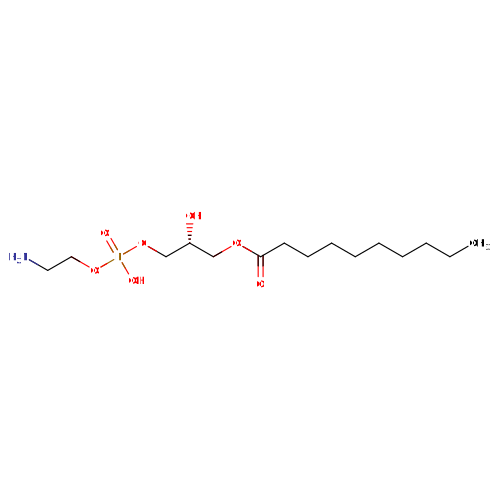 | ||||||||||||
| Synonyms | Not Available | ||||||||||||
| Molecular Formula | C15H32NO7P | ||||||||||||
| Average Mass | 369.3908 | ||||||||||||
| Monoisotopic Mass | 369.191638895 | ||||||||||||
| IUPAC Name | Not Available | ||||||||||||
| Traditional Name | Not Available | ||||||||||||
| CAS Registry Number | Not Available | ||||||||||||
| SMILES | Not Available | ||||||||||||
| InChI Identifier | InChI=1S/C15H32NO7P/c1-2-3-4-5-6-7-8-9-15(18)21-12-14(17)13-23-24(19,20)22-11-10-16/h14,17H,2-13,16H2,1H3,(H,19,20)/t14-/m1/s1 | ||||||||||||
| InChI Key | GHDPWZXAKQIRIU-CQSZACIVSA-N | ||||||||||||
| Chemical Taxonomy | |||||||||||||
| Functional Ontology | |||||||||||||
| Not Available | |||||||||||||
| Physical Properties | |||||||||||||
| State | Expected Solid | ||||||||||||
| Predicted Properties | Not Available | ||||||||||||
| Spectra | |||||||||||||
| Chromatographic Retention Times and Retention Indices | |||||||||||||
| Retention Times | Not Available | ||||||||||||
| Retention Indices | Not Available | ||||||||||||
| Chromatographic Retention Times and Retention Indices | |||||||||||||
| Retention Times | Not Available | ||||||||||||
| Retention Indices | Not Available | ||||||||||||
| Biological Properties | |||||||||||||
| Cellular Locations | Not Available | ||||||||||||
| Biospecimen Locations | Not Available | ||||||||||||
| Tissue Locations | Not Available | ||||||||||||
| Associated OMIM IDs | |||||||||||||
| Human Proteins and Enzymes | |||||||||||||
| |||||||||||||
| Human Pathways | |||||||||||||
| Pathways |
| ||||||||||||
| Microbial Pathways | |||||||||||||
| Pathways | Not Available | ||||||||||||
| Metabolic Reactions | |||||||||||||
Reactions This table shows at most 20 reactions. For the full list of associated reactions: See All Associated Reactions
| |||||||||||||
| Health Effects and Bioactivity | |||||||||||||
| |||||||||||||
| Microbial Sources | |||||||||||||
| |||||||||||||
| Exposure Sources | |||||||||||||
| Other Exposures |
| ||||||||||||
| Host Biospecimen and Location | |||||||||||||
| |||||||||||||
| External Links | |||||||||||||
| External Links | Not Available | ||||||||||||
| General References | |||||||||||||
| |||||||||||||